AI Mastery Course
I designed the UX and companion extension for Study.com’s credit-eligible AI Mastery course. The system paved the way for more advanced AI systems within course materials.
- Designed a companion extension for our AI Mastery course.
- Directed students through tasks on sites across the Internet.
- Built a step system that scales to multi-step agent work.
- Launched a course companion that became a new business line.
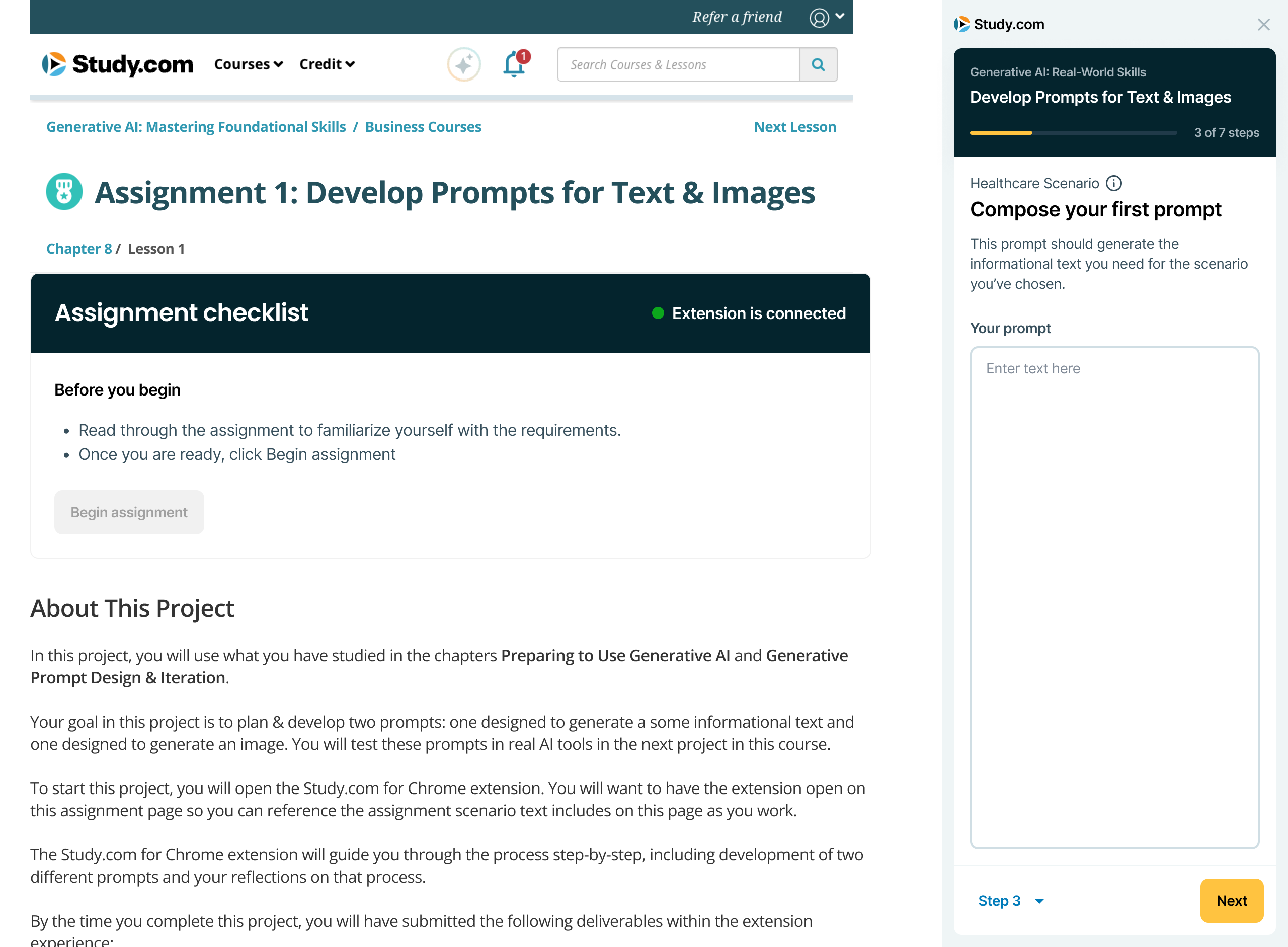
A companion extension for the AI Mastery course
ACE-recommended, credit-eligible courses have rigorous requirements. For Study.com’s first college-credit AI Mastery course we were thoughtfully testing boundaries. I worked with our content and learning science teams to develop course assignments that followed a linear path and benefitted from rapid AI feedback.
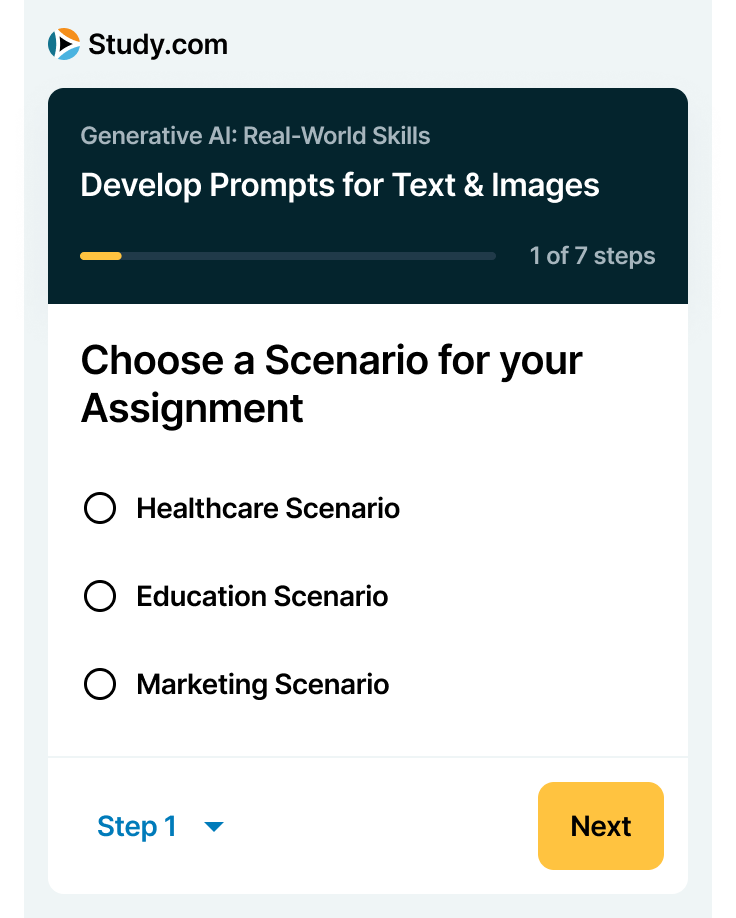
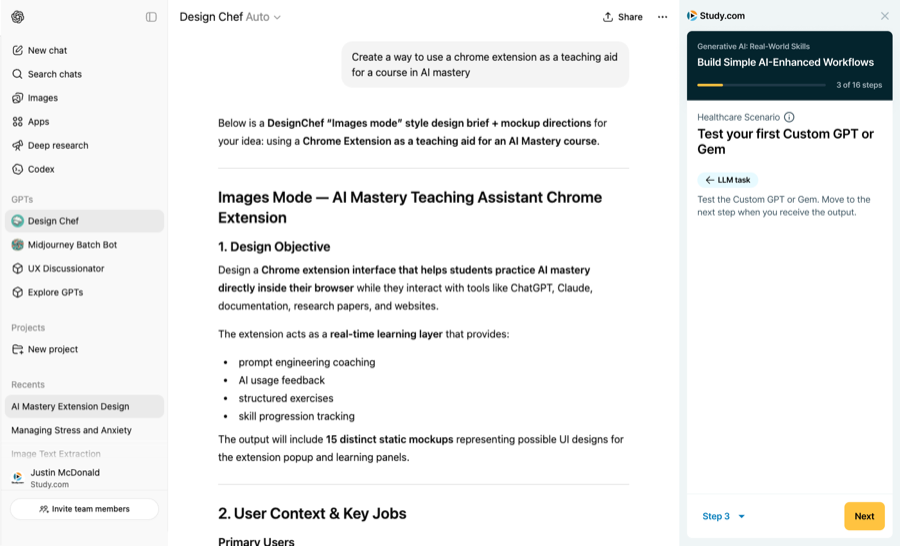
The course companion Chrome extension opened next to the course materials and guided students through activities and assignments. The extension was flexible enough to support diverse UI, and smart enough to remember past actions and help through errors.
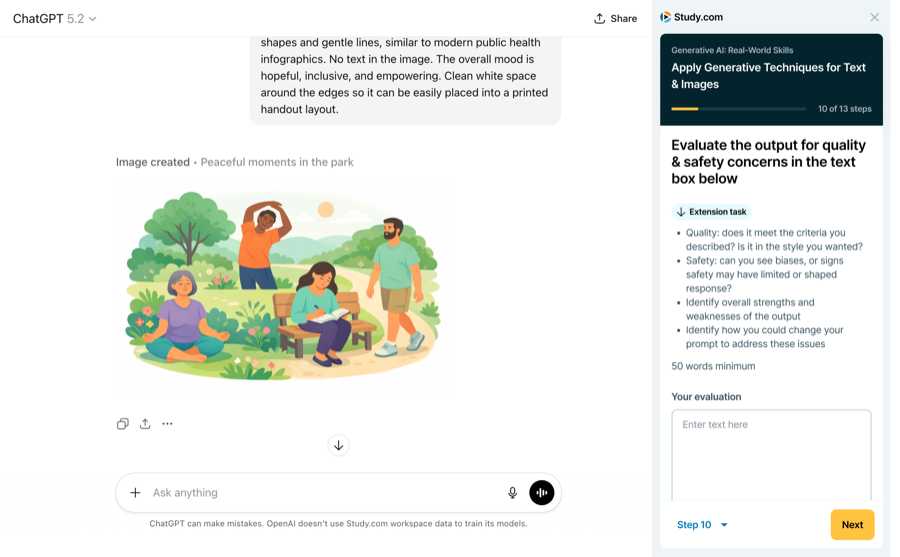
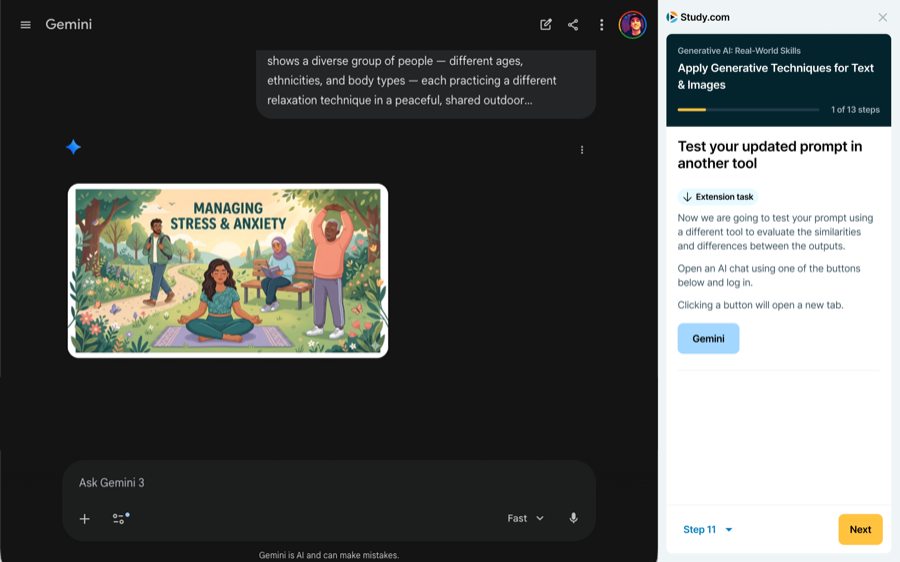
Tasks across multiple websites
The innovation of this feature was its ability to travel across the Internet and direct students through tasks on LLMs like ChatGPT and Gemini. This course directed students to run similar actions across sites and reflect on the results.
This feature was a true collaboration between design, engineering, and product, as different websites had different capabilities to share data. Simplicity in the UX helped users navigate complexity.
Built for multi-step agents
The true test of the system was the course assignment directing students to build and test multiple multi-step agents. The steps changed between the different LLMs, so I focused on using similar outputs as a throughline.
User testing at this stage was incredibly helpful. Recruiting non-technical users in unmoderated studies helped me see first-hand where instructions or UI were unclear.
Innovative UX, and a new business line
The work I did on this project with a small team convinced Study.com to pursue AI-companions as an integral part of a new professional-development business. Customers reacted positively as well, with over 50 new signups in the first 2 days (a record for us!).
As with other systems I've designed, the focus on simplicity and scalability allowed learners to understand and master a very complicated subject matter.